
Florida vs. Nevada Annual Report Comparison
Florida vs. Nevada Annual Report Comparison
Florida and Nevada are frequently mentioned in the same breath when it comes to business-friendly states. Both states share the significant advantage of having no personal state income tax, which makes them popular choices for entrepreneurs and business owners looking to minimize their tax burden. Both states are also known for strong privacy protections for business owners and relatively straightforward business formation processes.
However, when it comes to annual filing requirements, Florida and Nevada take different approaches. Florida uses an annual report system through its Division of Corporations, while Nevada requires an annual list of officers or managers filed with the Secretary of State, along with a state business license renewal. In this comprehensive comparison, we will examine how these two no-income-tax states stack up against each other across every major dimension of annual business compliance.
Side-by-Side Comparison Table
| Requirement | Florida | Nevada |
|---|---|---|
| Filing Name | Annual Report | Annual List of Officers/Managers + Business License |
| Filing Frequency | Annually | Annually |
| Deadline | May 1 (all entities) | Anniversary month of formation (last day of month) |
| LLC Filing Fee (Annual List) | $138.75 | $150 |
| Corporation Filing Fee (Annual List) | $150.00 | $150 |
| State Business License Fee | None (may vary by locality) | $200 per year |
| Total Minimum Annual Cost (LLC) | $138.75 | $350 ($150 annual list + $200 business license) |
| Total Minimum Annual Cost (Corp) | $150.00 | $350 ($150 annual list + $200 business license) |
| Nonprofit Filing Fee | $61.25 | $50 (annual list only, no business license) |
| State Income Tax | None (personal) / 5.5% (corporate) | None (personal and corporate) |
| Commerce Tax | None | Yes (businesses with gross revenue over $4 million) |
| Late Penalty | $400 flat fee | $150 penalty for late annual list |
| Filing Method | Online via SunBiz.org | Online via NVSilverFlume or by mail |
| Required Information | Officers, registered agent, addresses, FEIN | Officers/managers, registered agent, business license info |
| Consequence of Non-Filing | Administrative dissolution after September | Revocation of charter / right to transact business |
Detailed Breakdown
What Each State Requires
Florida: Florida requires a single annual report filed with the Division of Corporations through SunBiz.org. This report updates the state on your business's officers, registered agent, principal and mailing addresses, and FEIN. It is a straightforward informational filing with a fixed fee. There is no separate state business license requirement at the state level (though local jurisdictions may have their own licensing requirements).
Nevada: Nevada requires two separate filings. First, you must file an Annual List of Officers (for corporations) or Annual List of Managers or Managing Members (for LLCs) with the Secretary of State. Second, most businesses must obtain and renew a State Business License annually. These are two separate filings with two separate fees, which adds complexity compared to Florida's single filing.
Deadlines
Florida: All entities file by May 1 each year. This uniform deadline applies to every LLC, corporation, limited partnership, and nonprofit in the state. The filing window opens January 1.
Nevada: The annual list is due by the last day of the month in which the entity was formed or qualified to do business in Nevada. For example, if your LLC was formed in March, your annual list is due by March 31 each year. The state business license is due on the same anniversary basis. This anniversary-based deadline system means every business has a different due date, which can be harder to track and remember than Florida's single May 1 deadline.
Florida's uniform deadline is simpler and easier to manage, especially for businesses that own multiple entities.
Fees: Florida Is More Affordable
Florida: Florida charges a single flat fee for the annual report:
- LLC: $138.75
- Corporation: $150.00
- Limited Partnership: $150.00
- Nonprofit: $61.25
There is no separate state business license fee at the state level in Florida.
Nevada: Nevada's costs are higher due to the dual-filing requirement:
- Annual List filing fee: $150 for all entity types (except nonprofits at $50)
- State Business License: $200 per year (most businesses must obtain this; nonprofits are exempt)
- Total for LLCs and Corporations: $150 + $200 = $350 per year
- Total for Nonprofits: $50 (no business license required)
This means that for LLCs, Florida is $211.25 cheaper per year ($138.75 vs. $350). For corporations, Florida is $200 cheaper per year ($150 vs. $350). Over a ten-year period, a Nevada LLC would pay $3,500 in annual filing costs, while a Florida LLC would pay just $1,387.50 -- a savings of more than $2,100.
Late Penalties
Florida: A flat $400 late fee for any annual report filed after May 1. This penalty is steep but predictable.
Nevada: A $150 late penalty is added to the annual list filing fee if not filed by the deadline. For the state business license, additional penalties may apply. While Nevada's late penalty for the annual list is lower than Florida's, the total late cost can be comparable when both the annual list and business license penalties are combined.
Tax Considerations
Florida: No personal state income tax. A 5.5% corporate income tax applies to C-corporations (with a $50,000 exemption), but pass-through entities like LLCs and S-corporations generally pay no state income tax. No franchise tax for most entities.
Nevada: No personal income tax and no corporate income tax. However, Nevada does have a Commerce Tax that applies to businesses with Nevada gross revenue exceeding $4 million. The Commerce Tax rate varies by industry but generally ranges from 0.051% to 0.331%. Most small businesses fall below the $4 million threshold and are not affected. Nevada also has no franchise tax.
Both states are highly tax-friendly, but Nevada has a slight edge with no corporate income tax at all (versus Florida's 5.5% on C-corporations). However, for the vast majority of small businesses, especially LLCs and S-corporations, the tax differences between these two states are minimal or nonexistent.
Privacy Protections
Both Florida and Nevada are known for business privacy protections, but Nevada is often cited as having stronger privacy features:
- Nevada: Nevada allows "nominee" officers and directors, meaning you can list someone other than the actual owner as the officer or director of record. Nevada also does not share business entity information with the IRS. These features provide an extra layer of privacy.
- Florida: Florida's annual report requires listing actual officers, directors, or managing members with their addresses. This information becomes part of the public record on SunBiz.org. While Florida does provide strong liability protections for LLC members, the privacy protections are not as robust as Nevada's nominee system.
If privacy is your primary concern, Nevada may have an advantage. However, for most businesses, the cost savings and simplicity of Florida's annual filing system outweigh the privacy difference.
Filing Methods
Florida: All annual reports are filed online through SunBiz.org. The system is fast, user-friendly, and typically processes filings within 24 to 48 hours.
Nevada: The annual list and business license can be filed online through NVSilverFlume.gov (Nevada's business portal) or by mail. The online system is functional but requires navigating two separate filings (annual list and business license), which adds time and complexity.
Consequences of Non-Filing
Florida: If the annual report is not filed by the third Friday of September, the Division of Corporations begins administrative dissolution or revocation proceedings. Reinstatement requires filing all overdue reports and paying all fees and penalties.
Nevada: If the annual list is not filed, the Secretary of State will revoke the entity's charter (for domestic entities) or revoke its qualification (for foreign entities). The entity loses its right to transact business in Nevada. Reinstatement requires filing all delinquent annual lists, paying all fees and penalties, and applying for reinstatement.
Which State Is Better for Annual Compliance?
When comparing annual filing requirements specifically, Florida holds several advantages over Nevada:
- Lower total cost: Florida's annual report costs $138.75 (LLC) or $150 (corp), while Nevada's dual filing costs $350. Florida saves businesses $200+ per year.
- Single filing: Florida requires one filing with one agency. Nevada requires two separate filings (annual list + business license).
- Uniform deadline: Florida's May 1 deadline is easy to remember and applies to all entities. Nevada's anniversary-based deadlines vary by business.
- Simpler process: Florida's SunBiz portal handles everything in one place. Nevada requires navigating two separate processes.
Nevada's advantages -- stronger privacy protections and no corporate income tax -- are real but may not justify the higher annual filing costs for many businesses. For business owners who prioritize simplicity and cost-effectiveness in their annual compliance, Florida's system is the clear winner.
FloridaAnnualFiling.com makes Florida annual report filing even easier. For just $99 plus the state filing fee, our team handles your entire filing from start to finish, ensuring accuracy, timeliness, and compliance. The deadline is May 1 -- miss it and you face a $400 late fee. File Your Annual Report Now
Frequently Asked Questions
Is it cheaper to maintain a business in Florida or Nevada?
Florida is cheaper for annual compliance. A Florida LLC pays $138.75 per year, while a Nevada LLC pays $350 per year ($150 annual list + $200 business license). Over time, the savings add up significantly. In terms of taxes, both states have no personal income tax, making them both attractive. Nevada has no corporate income tax, while Florida has a modest 5.5% corporate tax on C-corps only.
Does Nevada have an annual report like Florida?
Nevada does not call it an "annual report." Instead, Nevada requires an Annual List of Officers or Managers plus a separate State Business License renewal. Together, these serve a similar purpose to Florida's annual report but involve two separate filings and higher total fees.
Which state has better privacy for business owners?
Nevada is generally considered to offer stronger privacy protections, including the ability to use nominee officers and directors. Florida requires listing actual officers and members on the annual report, which becomes public record on SunBiz.org. However, for most small businesses, the privacy difference may not be significant enough to justify Nevada's higher annual costs.
Do I need to file in both states if I have businesses in both?
Yes. Each state's filing requirements are independent. If you have a Florida LLC and a Nevada LLC (or one entity registered in both states), you must file the annual report in Florida and the annual list plus business license in Nevada, paying all applicable fees in each state.
Can FloridaAnnualFiling.com handle my Florida annual report?
Yes. For $99 plus the state filing fee ($138.75 for LLCs, $150 for corporations, $61.25 for nonprofits), we handle your complete Florida annual report filing. Our team ensures everything is accurate and filed on time. The deadline is May 1 each year. File Your Annual Report Now or Read More Guides for additional information about Florida business compliance.
Related Posts
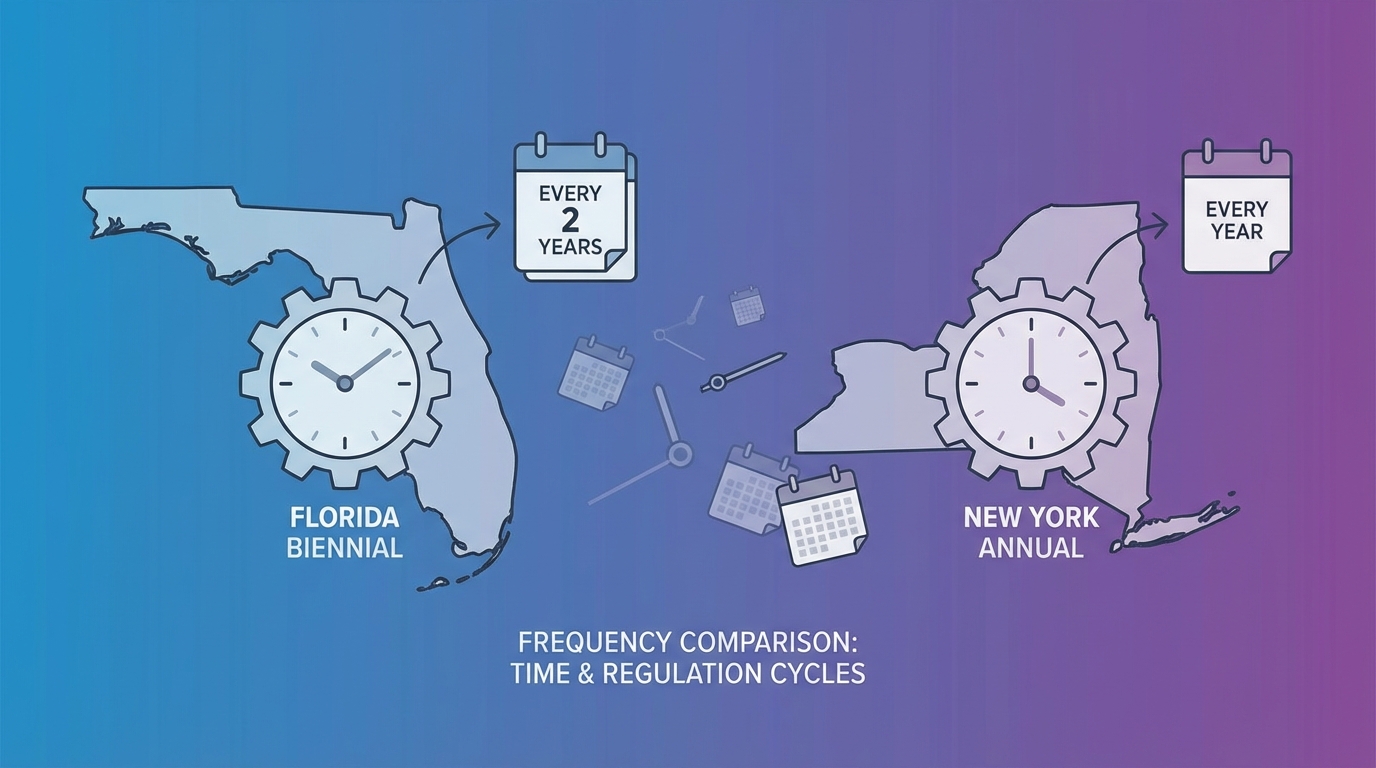
Florida vs. New York Biennial Statement vs. Annual Report
Florida requires an annual report while New York uses a biennial statement for LLCs. Discover how these two major states compare on deadlines, fees, tax obligations, and filing complexity.
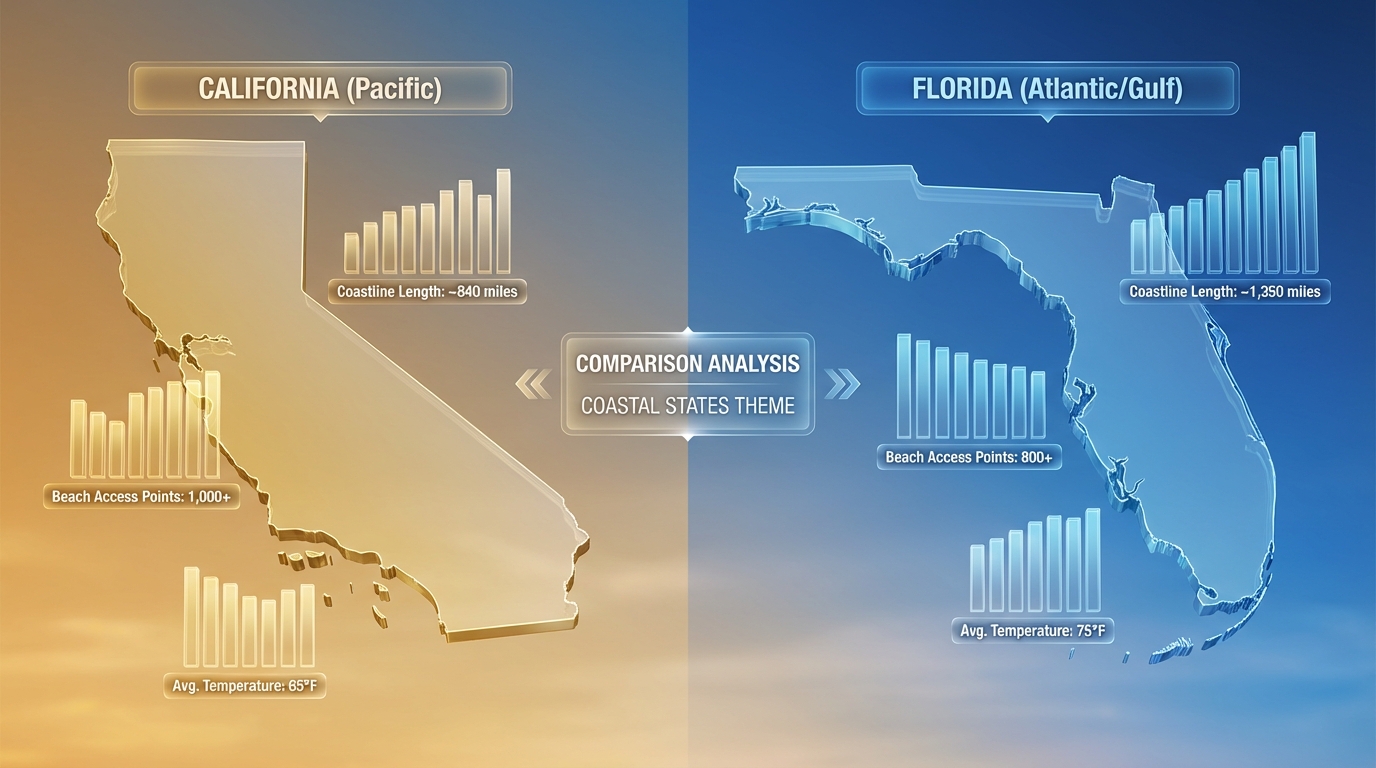
Florida vs. California: Annual Report & Statement of Information
Florida files an annual report while California requires a Statement of Information -- and that is just the beginning of the differences. Compare fees, franchise taxes, deadlines, and complexity.
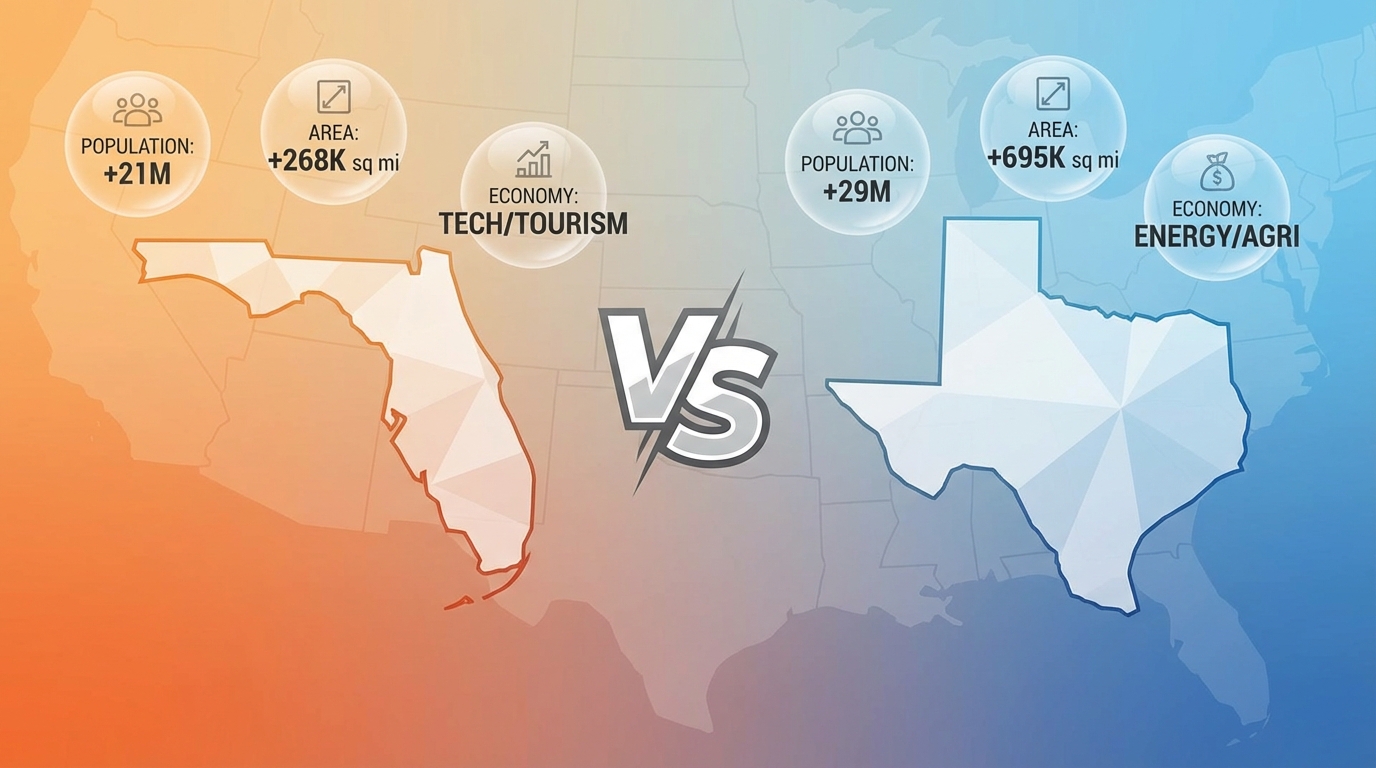
Florida vs. Texas Annual Report: Key Differences
Florida and Texas are both no-income-tax states, but their annual business filing requirements differ significantly. Compare deadlines, fees, franchise tax obligations, and more.