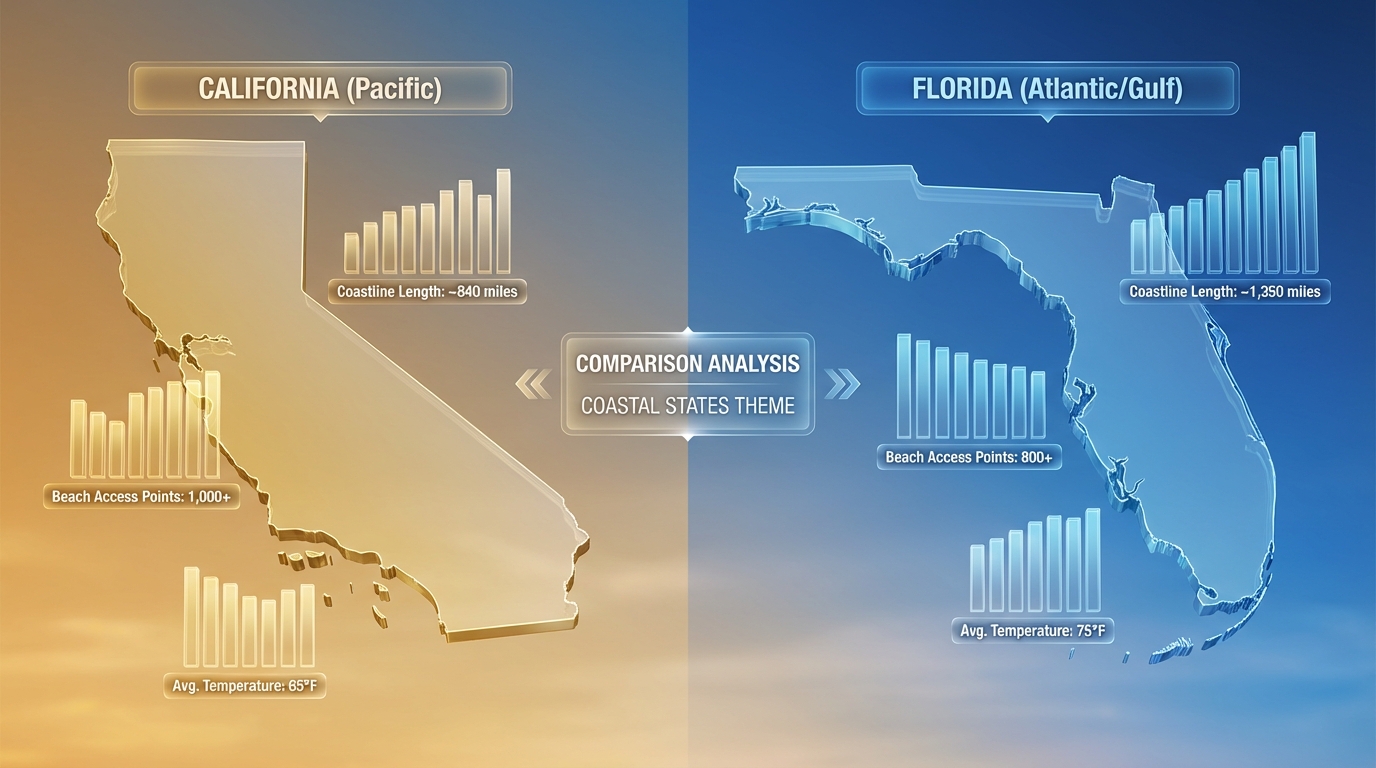
Florida vs. California: Annual Report & Statement of Information
Florida vs. California: Annual Report & Statement of Information
Florida and California represent two of the largest economies in the United States, but they could not be more different when it comes to business compliance and annual filing requirements. Florida is known for its business-friendly environment, with no state income tax and a simple annual report process. California, by contrast, is known for its complex regulatory environment, multiple filing requirements, and a minimum franchise tax that applies to virtually every business entity operating in the state.
If you are an entrepreneur choosing between these two states, or if you operate businesses in both, understanding how their annual filing requirements compare is critical. In this detailed comparison, we will examine Florida's annual report side by side with California's Statement of Information, franchise tax, and related requirements to show you exactly where they differ and where Florida holds significant advantages.
Side-by-Side Comparison Table
| Requirement | Florida | California |
|---|---|---|
| Filing Name | Annual Report | Statement of Information (SI) |
| Filing Frequency | Annually | Annually (LLCs) / Annually (corps, due within specific months) |
| Deadline | May 1 (all entities) | Varies by entity (anniversary-based for many) |
| LLC Filing Fee (SI) | $138.75 | $20 |
| Corporation Filing Fee (SI) | $150.00 | $25 |
| Nonprofit Filing Fee (SI) | $61.25 | $20 |
| Minimum Franchise Tax | None ($0) | $800 per year (LLCs and corps) |
| LLC Fee (Revenue-Based) | None | $900 to $11,790 (based on gross receipts over $250,000) |
| State Income Tax | None | 8.84% corporate tax / 1% - 13.3% personal |
| Late Penalty (Annual Report) | $400 flat fee | $250 penalty for late SI filing |
| Filing Method | Online via SunBiz.org | Online via bizfileOnline or by mail |
| Consequence of Non-Filing | Administrative dissolution after September | Suspension/forfeiture by FTB and SOS |
Detailed Breakdown
Filing Types and Deadlines
Florida: Florida uses a single, unified annual report for all entity types. Every LLC, corporation, limited partnership, and nonprofit must file by May 1 each year. This uniform deadline makes compliance simple and easy to track.
California: California's system is more fragmented. The Statement of Information (SI) is filed with the California Secretary of State. For LLCs, the initial SI must be filed within 90 days of organization and then every two years (biennially). For corporations, the initial SI must be filed within 90 days and then annually. The specific due date is based on the entity's formation or registration date. On top of the SI, businesses must also deal with the Franchise Tax Board (FTB) for minimum franchise tax payments and corporate income tax returns. This dual-agency system creates additional complexity.
The Franchise Tax: California's Biggest Burden
This is where the comparison becomes most striking. Florida has no franchise tax. California imposes an $800 minimum annual franchise tax on virtually every LLC and corporation, regardless of whether the business earned any income. This means a California LLC that earned zero dollars in revenue still owes the state $800 just for the privilege of existing. A Florida LLC in the same situation would only owe the $138.75 annual report filing fee.
The California franchise tax burden gets even heavier for LLCs with higher revenue. In addition to the $800 minimum, California LLCs must pay an additional fee based on gross receipts:
- $250,000 - $499,999 in gross receipts: $900 additional fee
- $500,000 - $999,999: $2,500 additional fee
- $1,000,000 - $4,999,999: $6,000 additional fee
- $5,000,000 and above: $11,790 additional fee
This means a California LLC with $5 million in gross receipts would pay $800 (minimum franchise tax) + $11,790 (gross receipts fee) = $12,590 per year just in state entity fees, not including corporate income tax. A Florida LLC with the same revenue would pay just $138.75 for its annual report. The difference is staggering.
State Income Tax
Florida: Florida has no personal income tax and a relatively low corporate income tax rate (5.5% for C-corporations, with no corporate tax for pass-through entities like LLCs and S-corporations).
California: California has one of the highest tax rates in the country. The corporate income tax rate is 8.84%, and personal income tax rates range from 1% to 13.3% (the highest marginal rate in the nation). This is in addition to the franchise tax and LLC fee discussed above.
Statement of Information Filing Fee
California's Statement of Information filing fee is actually quite low: $20 for LLCs and $25 for corporations. However, this is deceptive because the SI filing fee is just one of many costs. The real expense in California is the franchise tax, LLC fee, and income tax -- not the SI filing fee.
Florida's annual report fee, while higher than California's SI fee, includes everything. There is no separate franchise tax, no gross receipts fee, and no state income tax. The total annual compliance cost in Florida is dramatically lower.
Late Penalties
Florida: A flat $400 late fee for annual reports filed after May 1.
California: A $250 penalty for late Statement of Information filings. However, late franchise tax payments incur additional penalties and interest through the Franchise Tax Board, which can be substantial.
Filing Methods
Florida: All annual reports are filed online through SunBiz.org. The process is fast, typically taking just a few minutes, and filings are processed within 24-48 hours.
California: Statements of Information can be filed online through bizfileOnline (the Secretary of State's portal) or by mail. Franchise tax returns are filed separately with the Franchise Tax Board. The dual-filing requirement adds complexity and time.
Consequences of Non-Filing
Florida: Failure to file the annual report by the third Friday of September results in administrative dissolution or revocation.
California: Failure to file the SI or pay the franchise tax can result in suspension of the entity by the Franchise Tax Board and/or the Secretary of State. A suspended entity cannot legally conduct business, defend lawsuits, or maintain its business name. Reinstatement requires filing all past-due documents, paying all taxes, penalties, and interest, and filing a certificate of revivor.
Total Annual Cost Comparison
Let us compare the total minimum annual cost to maintain a basic LLC in each state:
| Cost Item | Florida LLC | California LLC |
|---|---|---|
| Annual Report / Statement of Information | $138.75 | $20 |
| Minimum Franchise Tax | $0 | $800 |
| State Income Tax (on profits) | $0 (pass-through) | Varies (personal rates up to 13.3%) |
| Minimum Total Annual Cost | $138.75 | $820+ |
A Florida LLC costs a minimum of $138.75 per year to maintain with the state. A California LLC costs a minimum of $820 per year (and can be much higher with the gross receipts fee and income tax). That is nearly a 6x difference in minimum annual costs, making Florida's system substantially more affordable.
Why Florida's System Is More Business-Friendly
- No franchise tax: The single biggest advantage. Saves businesses at least $800 per year compared to California.
- No state income tax: Florida's lack of personal income tax is a major benefit for business owners.
- Simple, unified filing: One annual report, one deadline (May 1), one agency (Division of Corporations).
- Predictable costs: Flat filing fees with no revenue-based surcharges.
- Efficient online system: SunBiz.org is straightforward and fast.
- Lower total compliance cost: Even with the higher filing fee, Florida's total cost is a fraction of California's.
For just $99 plus the state filing fee, FloridaAnnualFiling.com handles your entire Florida annual report filing. File Your Annual Report Now
Frequently Asked Questions
Does California have an annual report like Florida?
California's equivalent is the Statement of Information (SI), filed with the Secretary of State. However, California businesses must also deal with the Franchise Tax Board for franchise tax and income tax filings, making the overall compliance burden much heavier than Florida's single annual report.
How much more expensive is it to maintain a business in California vs. Florida?
At minimum, a California LLC costs $820 per year ($800 franchise tax + $20 SI filing fee), while a Florida LLC costs just $138.75 per year. For businesses with higher revenue, the gap widens dramatically due to California's gross receipts fee (up to $11,790) and income tax.
Do I need to file in both states if I have a Florida LLC doing business in California?
Yes. If your Florida LLC is registered to do business in California as a foreign LLC, you must file annual reports in Florida and Statements of Information in California, plus pay California's franchise tax and any applicable LLC fees. This dual compliance can be expensive.
Is it worth moving my business from California to Florida?
Many business owners have relocated from California to Florida for the tax savings and simpler business environment. The savings from avoiding the $800 minimum franchise tax, California income tax, and LLC fees can be substantial. However, this decision involves many factors beyond annual filing requirements. Consult with a business attorney and tax professional before making the move.
Can FloridaAnnualFiling.com file my Florida annual report?
Yes. For $99 plus the state filing fee ($138.75 for LLCs, $150 for corporations, $61.25 for nonprofits), we handle your complete Florida annual report filing. The deadline is May 1, and late filings incur a $400 penalty. File Your Annual Report Now or Read More Guides.
Related Posts

Florida vs. Nevada Annual Report Comparison
Florida and Nevada are both popular no-income-tax states for business formation. Compare their annual report requirements, fees, deadlines, business license taxes, and filing processes.
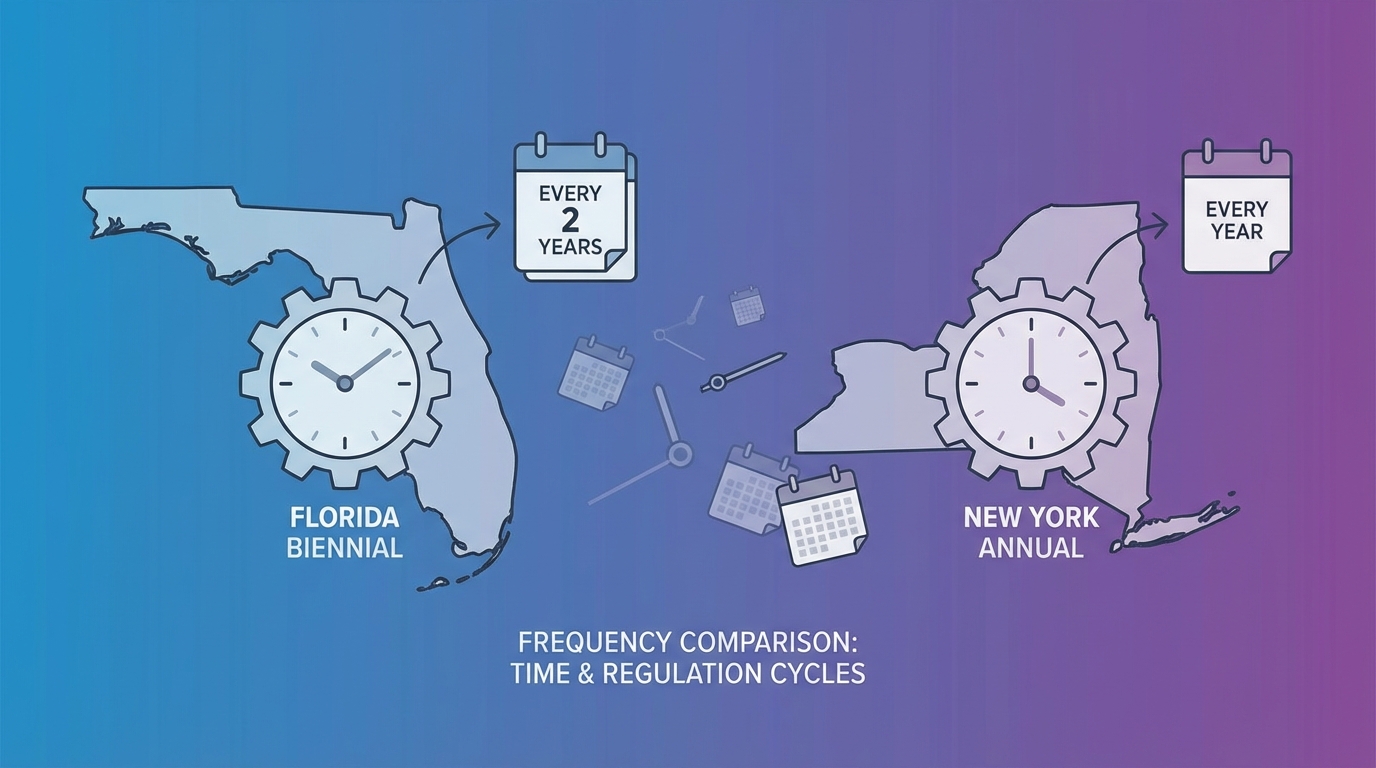
Florida vs. New York Biennial Statement vs. Annual Report
Florida requires an annual report while New York uses a biennial statement for LLCs. Discover how these two major states compare on deadlines, fees, tax obligations, and filing complexity.
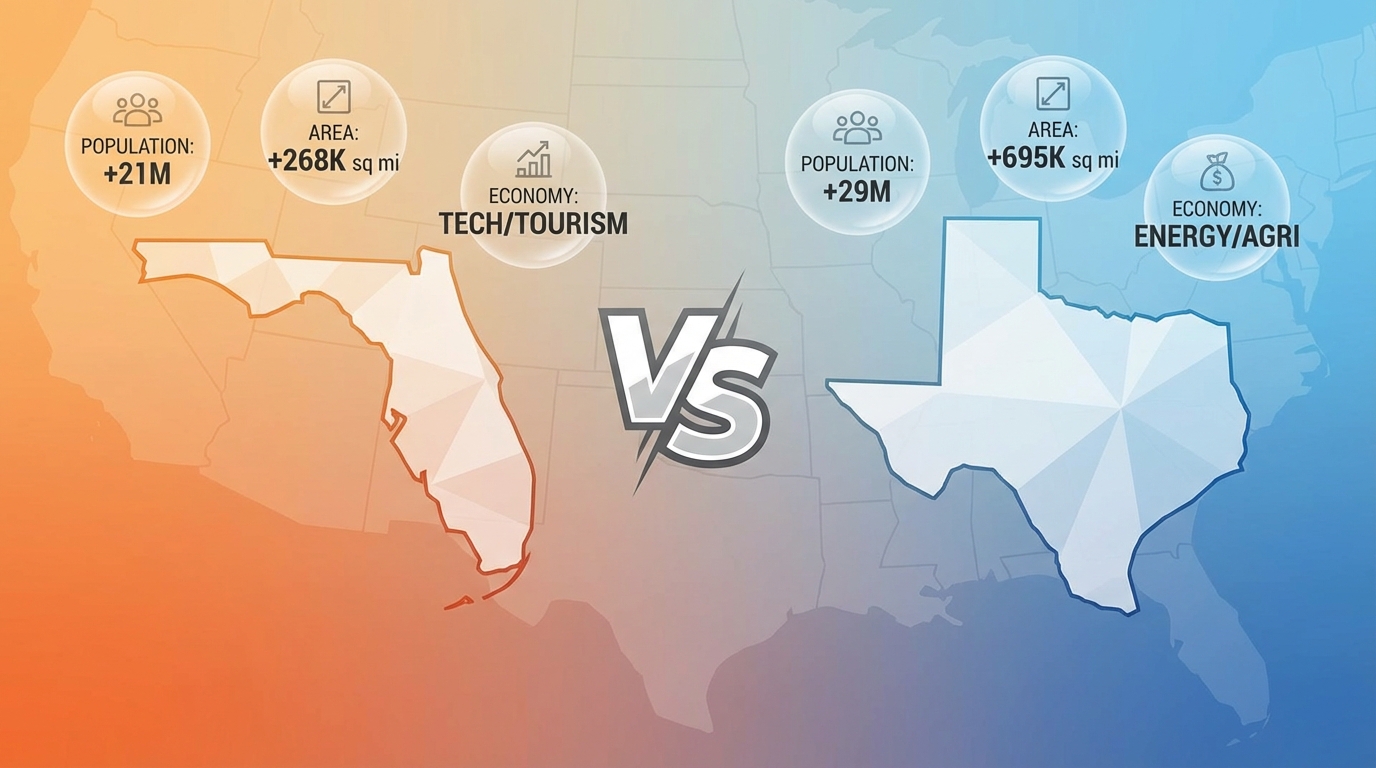
Florida vs. Texas Annual Report: Key Differences
Florida and Texas are both no-income-tax states, but their annual business filing requirements differ significantly. Compare deadlines, fees, franchise tax obligations, and more.