
Florida vs. Delaware Annual Report: Requirements Compared
Florida vs. Delaware Annual Report: Requirements Compared
Florida and Delaware are two of the most popular states in America for business formation. Delaware has long been the go-to state for incorporating, especially for large corporations, venture-backed startups, and businesses that plan to go public. Florida, meanwhile, has become one of the fastest-growing states for business, attracting entrepreneurs with its favorable tax climate, growing economy, and strategic location. If you operate a business in either or both of these states, understanding the annual report requirements for each is essential for maintaining compliance.
In this comprehensive comparison, we will examine how Florida and Delaware annual report requirements differ across every key dimension: deadlines, fees, penalties, required information, filing methods, and more. Whether you are deciding where to incorporate, managing entities in both states, or simply want to understand how your Florida obligations compare, this guide provides the clarity you need.
Side-by-Side Comparison Table
| Requirement | Florida | Delaware |
|---|---|---|
| Filing Name | Annual Report | Annual Report (corporations) / Annual Tax (LLCs) |
| Filing Frequency | Annually | Annually |
| Deadline | May 1 | March 1 (corporations) / June 1 (LLCs) |
| LLC Filing Fee | $138.75 | $300 (annual tax, no report required) |
| Corporation Filing Fee | $150.00 | Minimum $225 (franchise tax + annual report fee) |
| Nonprofit Filing Fee | $61.25 | $25 |
| Late Penalty | $400 flat fee | $200 + 1.5% monthly interest (corporations) |
| LLC Late Penalty | $400 flat fee | $200 penalty + $1.5% monthly interest |
| Filing Method | Online via SunBiz.org | Online or by mail |
| Required Information | Officers, registered agent, addresses, FEIN | Officers, directors, stock info (corps); minimal for LLCs |
| Franchise Tax | None (no state income tax) | Yes (based on authorized shares or assumed par value) |
| Consequence of Non-Filing | Administrative dissolution after September | Voided charter / forfeiture |
Detailed Breakdown
Filing Deadlines
Florida: All business entities in Florida must file their annual report by May 1 each year. This applies to LLCs, corporations, limited partnerships, and nonprofits equally. The filing window opens on January 1, giving businesses a full four months to complete the filing.
Delaware: Delaware has different deadlines depending on entity type. Corporations must file their annual report and pay franchise tax by March 1. LLCs must pay their annual tax by June 1. This split deadline system can be confusing for business owners who manage multiple entity types.
Florida's single, uniform deadline of May 1 for all entity types is simpler and easier to remember than Delaware's staggered deadlines.
Filing Fees
Florida: Florida's filing fees are straightforward and fixed:
- LLC: $138.75
- Corporation: $150.00
- Limited Partnership: $150.00
- Nonprofit: $61.25
Delaware: Delaware's fee structure is significantly more complex, particularly for corporations. Delaware corporations must pay both an annual report fee and a franchise tax. The franchise tax is calculated based on one of two methods: the Authorized Shares Method or the Assumed Par Value Capital Method. Depending on the company's capitalization structure, the franchise tax can range from a minimum of $225 (including the $50 annual report fee) to over $200,000 for large corporations. For LLCs, Delaware charges a flat $300 annual tax with no annual report filing required.
Florida's flat fee structure is dramatically simpler and more predictable than Delaware's variable franchise tax system. For most small to medium-sized businesses, Florida's annual costs are lower.
Late Penalties
Florida: If you miss the May 1 deadline, a flat $400 late fee is added to your filing fee. This applies to all entity types equally. While the $400 penalty is significant, it is a single, predictable amount.
Delaware: Delaware charges a $200 late penalty plus 1.5% monthly interest on the unpaid tax and penalty amount. For corporations with large franchise tax obligations, the interest charges can accumulate rapidly and become substantial.
Required Information
Florida: The Florida annual report requires:
- Entity name and document number
- Principal office address
- Mailing address
- Registered agent name and Florida street address
- Names, titles, and addresses of officers, directors, or members
- Federal Employer Identification Number (FEIN)
Delaware: For corporations, Delaware requires officer and director names and addresses, as well as detailed information about the corporation's stock (authorized shares, par value, and issued shares). For LLCs, Delaware does not require an annual report -- only the $300 annual tax payment.
Franchise Tax
Florida: Florida has no state income tax and no franchise tax for most business entities. The annual report filing fee is the primary annual cost to the state. This is one of the most significant advantages of operating in Florida.
Delaware: Delaware imposes a franchise tax on all corporations, calculated using either the Authorized Shares Method or the Assumed Par Value Capital Method. Companies with large numbers of authorized shares or high par values can face franchise tax bills in the tens or even hundreds of thousands of dollars. LLCs pay a flat $300 annual tax instead of a franchise tax.
Filing Method
Florida: Annual reports are filed online through the SunBiz.org portal. The process is fully electronic, fast, and typically processed within 24 to 48 hours.
Delaware: Annual reports and franchise tax payments can be filed online through the Delaware Division of Corporations website or by mail. Online filing is faster, but the system is not as streamlined as Florida's SunBiz portal.
Consequences of Non-Filing
Florida: If the annual report is not filed by the third Friday of September, the Division of Corporations will begin the process of administrative dissolution (for domestic entities) or revocation of authority (for foreign entities).
Delaware: Failure to file the annual report or pay the franchise tax will result in the voiding of the corporate charter or forfeiture. Reinstatement requires paying all back taxes, penalties, interest, and a reinstatement fee.
Which State Is More Business-Friendly for Annual Reporting?
When it comes to annual report requirements, Florida offers a more straightforward and predictable system than Delaware. Here is why:
- Simpler fee structure: Florida charges flat fees that are easy to budget for. Delaware's franchise tax system can produce unpredictable and sometimes shockingly high bills.
- Uniform deadline: Florida has one deadline (May 1) for all entity types. Delaware has different deadlines for corporations and LLCs.
- No franchise tax: Florida does not impose a franchise tax, while Delaware's franchise tax can be a major expense for corporations.
- Streamlined online filing: Florida's SunBiz portal is user-friendly and efficient.
- Predictable penalties: Florida's flat $400 late fee is straightforward, while Delaware's percentage-based interest can compound.
While Delaware remains popular for incorporation due to its well-developed corporate law, Chancery Court, and business-friendly legal framework, Florida's annual compliance system is simpler, less expensive for most businesses, and more straightforward to navigate.
Managing Entities in Both States
If your business is incorporated in Delaware but registered to do business in Florida as a foreign entity, you will need to file annual reports in both states. This means tracking two different deadlines, paying two sets of fees, and maintaining compliance with two different sets of requirements. Many businesses in this situation find it helpful to use a professional filing service to manage the Florida annual report while handling the Delaware filing separately.
FloridaAnnualFiling.com can handle your Florida annual report for just $99 plus the state filing fee, ensuring your Florida entity stays in good standing regardless of where your business is incorporated. File Your Annual Report Now
Frequently Asked Questions
Is it cheaper to maintain a business in Florida or Delaware?
For most small to medium-sized businesses, Florida is cheaper to maintain on an annual basis. Florida's annual report fees range from $61.25 to $150, with no franchise tax. Delaware's annual costs can be significantly higher, especially for corporations that face franchise tax bills based on authorized shares. However, Delaware may offer other advantages (such as its corporate law framework) that justify the higher annual costs for certain businesses.
Do I need to file annual reports in both Florida and Delaware if my company is a Delaware corporation registered in Florida?
Yes. If your business is incorporated in Delaware and registered as a foreign corporation in Florida, you must file annual reports and pay fees in both states. The Delaware annual report and franchise tax are due by March 1, while the Florida annual report is due by May 1.
Can I move my Delaware corporation to Florida to avoid the franchise tax?
You can domesticate (convert) your Delaware corporation to a Florida corporation, which would eliminate the Delaware franchise tax obligation going forward. However, this is a significant legal decision with implications for your corporate governance, contracts, and other matters. Consult with a business attorney before making this change.
Why do people incorporate in Delaware instead of Florida?
Delaware is popular because of its well-developed body of corporate law, the Delaware Court of Chancery (which specializes in corporate disputes), and its flexibility in corporate governance. These advantages are most significant for large corporations, venture-backed startups, and companies planning an IPO. For many small businesses, Florida incorporation with its simpler compliance requirements may be the better choice.
Can FloridaAnnualFiling.com help with my Florida annual report?
Yes. For just $99 plus the state filing fee, we handle your entire Florida annual report filing. Whether your business is a Florida domestic entity or a Delaware corporation registered in Florida, we ensure accurate and timely filing. File Your Annual Report Now or Read More Guides.
Related Posts

Florida vs. Nevada Annual Report Comparison
Florida and Nevada are both popular no-income-tax states for business formation. Compare their annual report requirements, fees, deadlines, business license taxes, and filing processes.
Florida vs. New York Biennial Statement vs. Annual Report
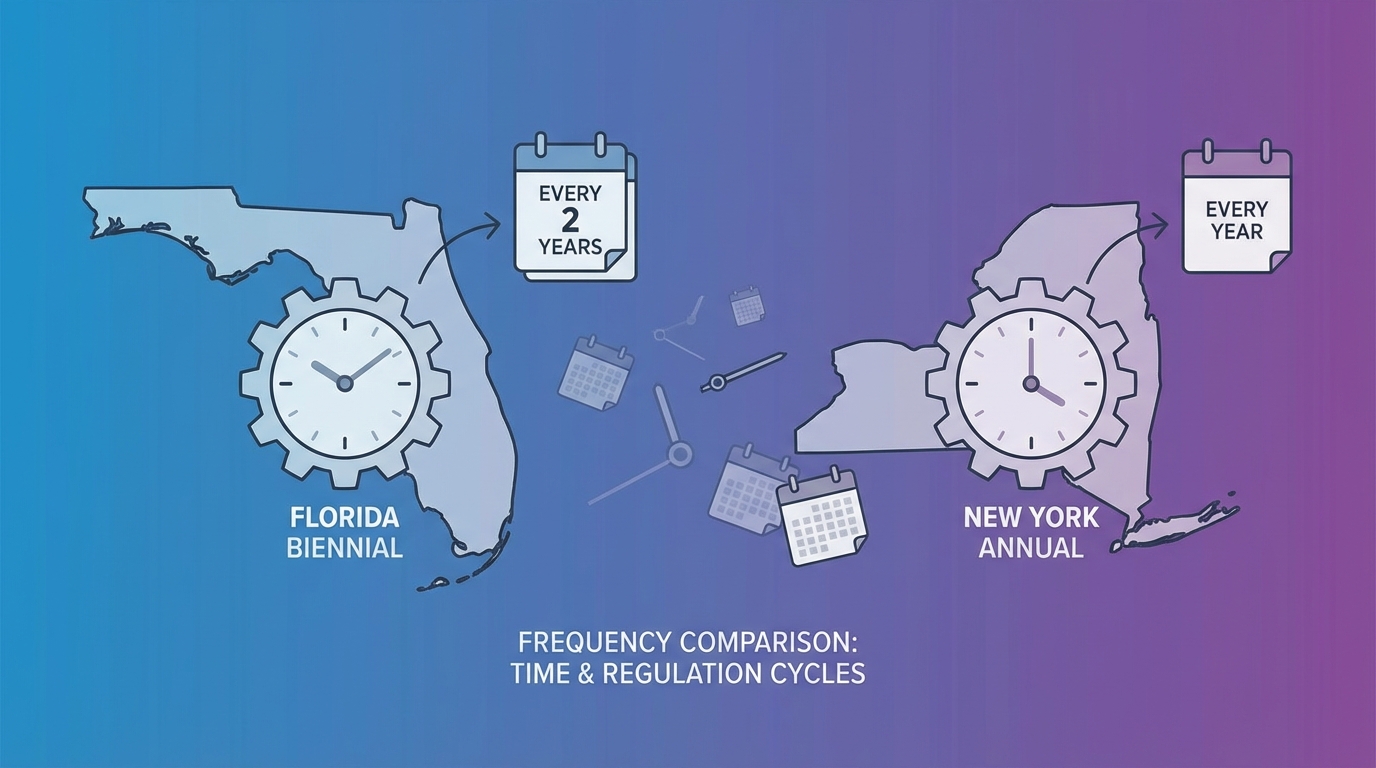
Florida requires an annual report while New York uses a biennial statement for LLCs. Discover how these two major states compare on deadlines, fees, tax obligations, and filing complexity.
Florida vs. California: Annual Report & Statement of Information
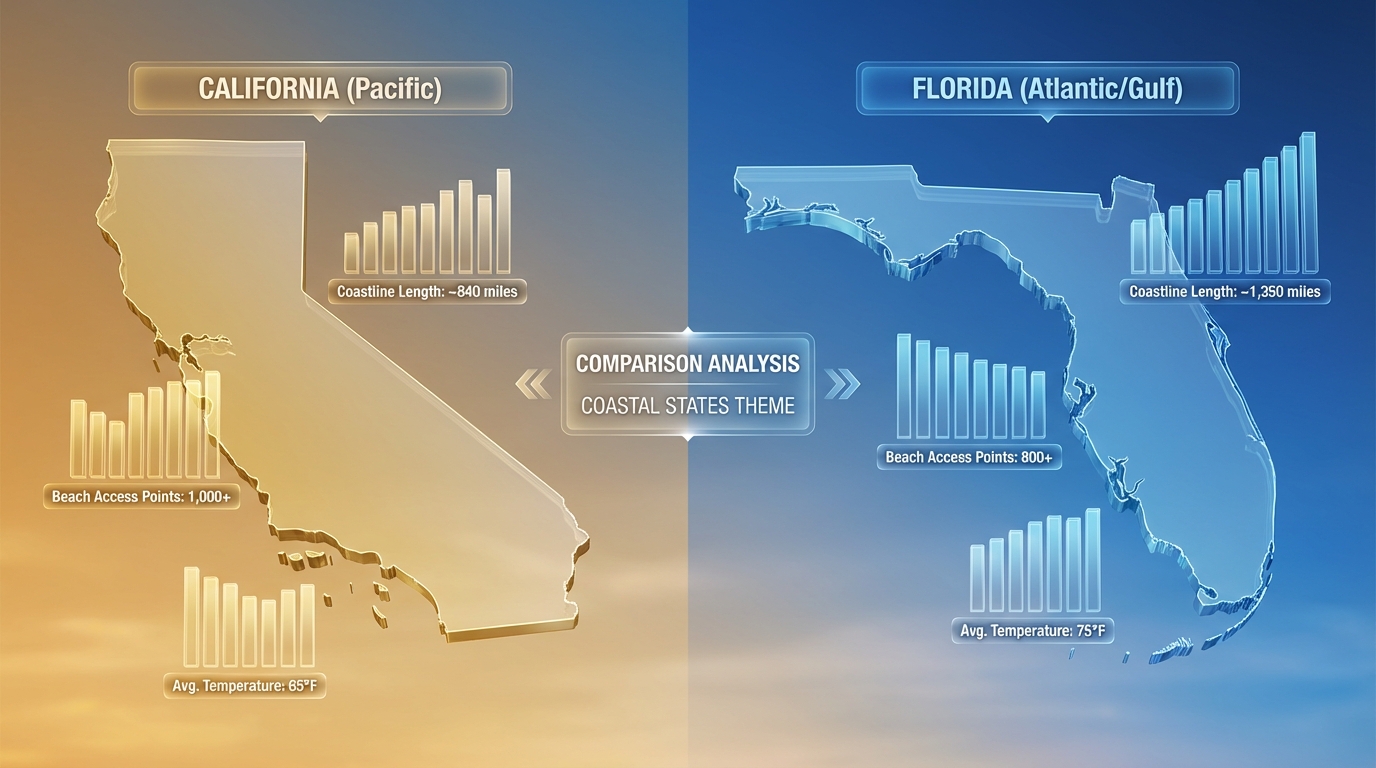
Florida files an annual report while California requires a Statement of Information -- and that is just the beginning of the differences. Compare fees, franchise taxes, deadlines, and complexity.