
Florida Holding Company Annual Report Requirements 2026
What Is a Florida Holding Company?
A holding company is a business entity that exists primarily to own and control other companies rather than to produce goods or services itself. In Florida, holding companies are commonly structured as either corporations or LLCs (Limited Liability Companies). There is no special "holding company" entity type under Florida law — a holding company is simply a standard business entity that serves a specific strategic purpose.
Holding companies are widely used in Florida for several purposes:
- Asset Protection: Separating valuable assets (real estate, intellectual property, equipment) into a holding company isolates them from the operational risks and liabilities of the operating business.
- Real Estate Holdings: Many Florida real estate investors use separate LLCs as holding companies for each property, limiting liability exposure between properties.
- Tax Planning: Holding company structures can provide tax planning opportunities, especially when combined with different entity-type elections for subsidiaries.
- Business Organization: Large businesses often use a parent holding company to own and manage multiple subsidiary operating companies.
- Privacy and Estate Planning: Holding companies can be used as part of estate planning strategies and to provide a layer of privacy for asset ownership.
Regardless of the strategic purpose, every holding company registered in Florida must file an annual report with the Florida Division of Corporations. This requirement applies even if the holding company has no employees, generates no revenue, and conducts no operational business activities. The annual report obligation is tied to the existence of the entity, not its level of activity.
Annual Report Requirements for Florida Holding Companies
Because Florida does not have a special entity type for holding companies, the annual report requirements depend entirely on how the holding company is structured:
Holding Company Structured as a Corporation
- Filing Fee: $150.00
- Late Fee: $400.00
- Deadline: May 1, 2026
- Required Information: Officers, directors, registered agent, principal and mailing addresses, EIN
Holding Company Structured as an LLC
- Filing Fee: $138.75
- Late Fee: $400.00
- Deadline: May 1, 2026
- Required Information: Managers/members, registered agent, principal and mailing addresses, EIN
Holding Company Structured as a Limited Partnership
- Filing Fee: $500.00
- Late Fee: $400.00
- Deadline: May 1, 2026
- Required Information: General partners, registered agent, principal and mailing addresses, EIN
The most common structures for Florida holding companies are LLCs and corporations. LLCs are often preferred for their flexibility, pass-through taxation, and lower filing fee.
Key Deadlines for Holding Company Annual Reports in 2026
January 1, 2026: Filing Opens
The filing window opens on the first day of the year. For holding company owners managing multiple entities, we recommend starting early to ensure all entities are filed before the deadline.
May 1, 2026: Filing Deadline
The May 1 deadline is universal for all Florida business entities. Each entity must file its own separate annual report by this date. If you have a holding company and multiple subsidiaries, each one has its own filing obligation.
After May 1: $400 Late Fee Per Entity
The $400 late fee applies to each entity individually. If you have a holding company and three subsidiaries, and all four miss the deadline, you would owe $400 in late fees for each entity — a total of $1,600 in penalties alone. This makes timely filing especially critical for holding company structures with multiple entities.
Third Friday of September: Administrative Dissolution
Any entity that fails to file by this date will be administratively dissolved (corporations and LLCs) or administratively revoked (limited partnerships). For a holding company, dissolution of the parent entity can have cascading effects on subsidiary relationships and ownership structures.
The Critical Difference: Holding Company vs. Subsidiary Filings
One of the most important things holding company owners must understand is that each entity files its own annual report separately. The holding company and each subsidiary are distinct legal entities in the eyes of the Florida Division of Corporations. Here is what this means in practice:
- Separate Filings: Your holding company files one annual report. Each subsidiary files its own separate annual report.
- Separate Fees: Each entity pays its own filing fee. There is no consolidated filing or group discount.
- Separate Deadlines: While the deadline is the same (May 1) for all entities, each entity's filing is independent. Filing the holding company's report does not satisfy the subsidiary's obligation, and vice versa.
- Separate Consequences: If one entity in the group misses the deadline, only that entity faces the late fee and potential dissolution. The other entities are unaffected — but the ownership structure may be impacted if a key entity is dissolved.
For example, if you have a holding company LLC that owns three subsidiary LLCs, you would need to file four separate annual reports and pay four separate filing fees ($138.75 each, totaling $555). This is a common point of confusion, and missing even one entity's filing can create significant problems.
Information Required on a Holding Company Annual Report
The information required is the same as for any corporation or LLC. However, holding companies often have unique considerations:
Principal Address
Many holding companies do not have a separate office. The principal address may be the same as the owner's home address, a virtual office, or the address of the primary operating subsidiary. Whatever address you use, ensure it is a valid physical address where the business can receive communications.
Registered Agent
If you manage multiple entities, using a single commercial registered agent for all entities can simplify administration. This ensures all legal notices for all entities go to one reliable point of contact.
Officers/Directors or Managers/Members
For corporation-based holding companies, you must list at least one director and one officer. For LLC-based holding companies, you must list at least one manager or managing member. In many holding company structures, the same individuals serve as officers or managers across both the holding company and its subsidiaries.
EIN (Federal Employer Identification Number)
Each entity in a holding company structure typically has its own EIN. Make sure you are using the correct EIN for each entity's annual report. A common mistake is accidentally entering a subsidiary's EIN on the holding company's report, or vice versa.
Common Holding Company Structures in Florida
Understanding your specific structure helps ensure proper annual report compliance:
Real Estate Holding Structure
A parent LLC (holding company) owns multiple child LLCs, each holding a separate piece of real estate. This is extremely common in Florida's active real estate market. Each LLC — the parent and every child — must file its own annual report. If you own 10 properties through 10 separate LLCs plus one parent LLC, that is 11 annual report filings.
Operating Company / Holding Company Split
A holding company owns valuable assets (real estate, equipment, intellectual property), and a separate operating company leases those assets. This structure protects the assets from the operating company's liabilities. Both entities must file annual reports.
Parent Corporation with Subsidiaries
A parent corporation owns controlling interests in one or more subsidiary corporations or LLCs. Each entity in the corporate family files its own annual report with its own filing fee.
Family Holding Company
Families often create holding companies to manage assets, facilitate estate planning, and provide a structure for generational wealth transfer. These entities, even if they hold passive investments and have no employees, must still file annual reports.
Strategies for Managing Multiple Entity Filings
Holding company owners with multiple entities face a significant compliance burden. Here are strategies to manage it effectively:
- Create a Master Checklist: Maintain a spreadsheet listing every entity, its document number, entity type, filing fee, and filing status. Update it each year as filings are completed.
- Use a Single Registered Agent: Using one commercial registered agent for all entities simplifies communication and ensures no notices are missed.
- File All Entities Together: Set aside time in January to file all annual reports at once, rather than filing them sporadically and risking missed deadlines.
- Use a Filing Service: FloridaAnnualFiling.com can handle annual reports for all entities in your holding company structure. Our service fee is $99 per entity plus the state filing fee. For multiple entities, this ensures consistent, accurate, and timely filing across your entire portfolio.
- Set Calendar Reminders: Set multiple reminders — one in January when filing opens, one in March as a mid-point check, and one in April as a final reminder before the May 1 deadline.
File Your Annual Report Now for all entities in your holding company structure.
What Happens If a Holding Company Is Dissolved
Administrative dissolution of a holding company has more far-reaching consequences than dissolution of a simple operating company:
- Ownership Structure Disrupted: If the holding company owns subsidiaries, dissolution can create ambiguity about ownership and control of those subsidiaries.
- Asset Protection Compromised: The liability shield provided by the holding company structure is compromised when the entity is dissolved.
- Banking Complications: Bank accounts held in the holding company's name may be frozen or restricted.
- Subsidiary Operations Affected: If subsidiaries depend on the holding company for management, funding, or licensing, dissolution can disrupt their operations.
- Tax Consequences: Dissolution can trigger tax events, particularly if the holding company held appreciated assets.
- Reinstatement Complexity: Reinstating a holding company involves not only the reinstatement filing itself but also potentially re-establishing or confirming ownership relationships with subsidiaries.
Holding Companies with No Activity: Do They Still Need to File?
A common question from holding company owners is whether a holding company that has no employees, no revenue, and no operational activity still needs to file an annual report. The answer is an emphatic yes.
The Florida annual report requirement is based on the existence of the entity, not its level of activity. As long as your holding company is registered as an active entity with the Florida Division of Corporations, it must file an annual report and pay the filing fee every year. The only way to eliminate this obligation is to formally dissolve or cancel the entity by filing the appropriate dissolution or cancellation documents.
Even dormant holding companies must file. Even holding companies that exist solely for asset protection, estate planning, or future use must file. There are no exceptions based on activity level, revenue, or purpose.
Frequently Asked Questions About Holding Company Annual Reports
Does each entity in my holding company structure need its own annual report?
Yes. Each entity registered with the Florida Division of Corporations — including the parent holding company and every subsidiary — must file its own separate annual report and pay its own filing fee. There is no consolidated filing option. If you have a holding company and five subsidiaries, that is six separate filings with six separate fees. Using FloridaAnnualFiling.com can simplify this process, as we handle all filings for $99 per entity plus the applicable state fee.
My holding company has no revenue and no employees. Do I still need to file?
Yes. The annual report requirement is based on the existence of the entity, not its activity level. As long as your holding company is registered as an active entity in Florida, it must file an annual report by May 1 each year. Even completely inactive or dormant holding companies must file. The only way to eliminate this obligation is to formally dissolve the entity.
What happens if my holding company is dissolved but its subsidiaries are not?
The subsidiaries can continue to exist as independent entities even if the parent holding company is dissolved. However, the ownership and control relationships between the holding company and subsidiaries may be affected. Depending on the operating agreements and governance documents, dissolution of the holding company could trigger specific provisions regarding ownership transfer, management changes, or buyout rights. It is strongly recommended to maintain the holding company in good standing to preserve the intended corporate structure.
Can I use the same registered agent for my holding company and all subsidiaries?
Yes, and this is actually recommended. Using a single commercial registered agent for all entities in your holding company structure simplifies administration, ensures consistency, and reduces the risk of missing important legal notices. The registered agent's address must be a physical street address in Florida, and the agent must be available during normal business hours.
Is the filing fee different for holding companies vs. operating companies?
No. The filing fee is based on the entity type, not the business purpose. An LLC pays $138.75 whether it is a holding company or an operating company. A corporation pays $150 regardless of its function. The $400 late fee also applies equally to all entity types.
Managing annual reports for a holding company structure can be complex. Let FloridaAnnualFiling.com handle it for you. File Your Annual Report Now or Read More Guides for additional information.
Related Posts
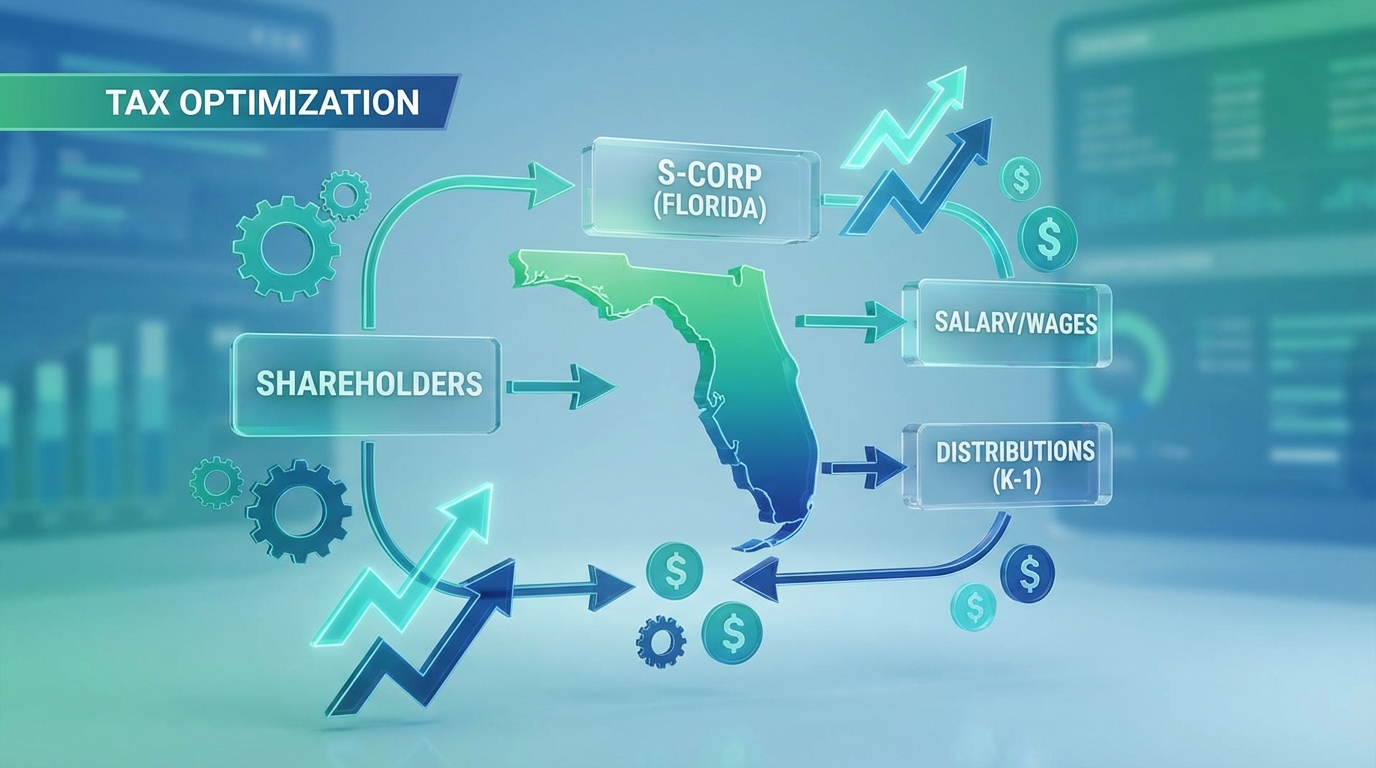
Florida S-Corp Annual Report: Filing Guide for S Corporations
Learn how to file your Florida S-Corporation annual report in 2026. This guide explains the critical distinction between state corporate filing and IRS S-election, plus all fees, deadlines, and requirements.

Florida Multi-Member LLC Annual Report: What You Need to Know
A comprehensive guide to filing Florida multi-member LLC annual reports in 2026. Learn about unique considerations for partnerships, management structures, and keeping all members informed of compliance obligations.
Florida Single-Member LLC Annual Report: Complete Guide 2026
Everything you need to know about filing a Florida single-member LLC annual report in 2026. Covers fees, deadlines, required information, and special considerations for solo LLC owners.