Florida Business Dissolution vs. Annual Report: What Every Owner Must Know in 2026
Understanding Florida Business Dissolution and Annual Reports
One of the most serious consequences a Florida business owner can face is having their company dissolved by the state. Yet many business owners do not fully understand the connection between their annual report filing obligation and the risk of dissolution. In this comprehensive guide, we explain the critical relationship between Florida business dissolution and the annual report, the different types of dissolution, how to prevent it, and what to do if your business has already been dissolved.
Whether you operate an LLC, a corporation, or a nonprofit in Florida, understanding these concepts is essential for protecting your business and your personal assets.
What Is Business Dissolution in Florida?
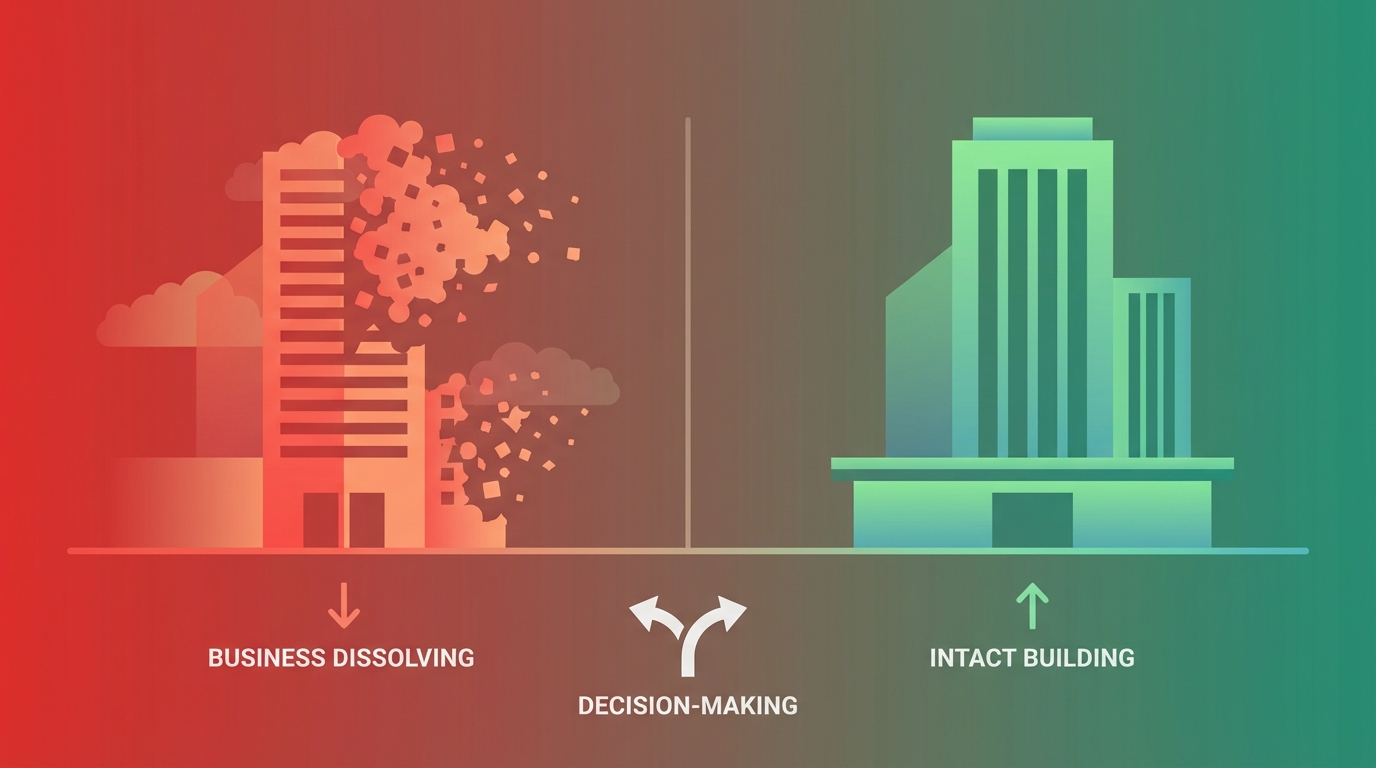
Business dissolution is the legal process of terminating a business entity's existence with the State of Florida. When a business is dissolved, it ceases to exist as a legal entity in the eyes of the state. There are two primary types of dissolution in Florida: voluntary dissolution and administrative dissolution.
Voluntary Dissolution
Voluntary dissolution occurs when the owners or members of a business deliberately choose to close their company. This is a planned, intentional action that typically involves:
- A vote or resolution by the members (for LLCs) or shareholders and directors (for corporations)
- Filing Articles of Dissolution with the Florida Division of Corporations
- Settling all outstanding debts and obligations
- Distributing remaining assets to owners or members
- Filing final tax returns
- Canceling business licenses and permits
Under Florida Statute 605.0701 (for LLCs) and Florida Statute 607.1401 (for corporations), voluntary dissolution is a formal process that the business owners initiate and control.
Administrative Dissolution
Administrative dissolution is very different. It happens when the Florida Division of Corporations involuntarily dissolves your business because you failed to comply with state requirements — most commonly, because you failed to file your annual report.
Under Florida Statute 605.0714 (for LLCs) and Florida Statute 607.1420 (for corporations), the state has the authority to administratively dissolve any business entity that fails to file its annual report by the deadline. The process typically follows this timeline:
- January 1 - May 1: Annual report filing period (no penalty)
- May 2 - Third Friday of September: Late filing period ($400 penalty added)
- After the third Friday of September: State begins administrative dissolution proceedings
Unlike voluntary dissolution, administrative dissolution is not something you choose. It is a punitive action taken by the state, and it can catch business owners off guard with severe consequences.
How Annual Reports Prevent Dissolution
The single most important thing you can do to prevent administrative dissolution is to file your Florida annual report on time every year. The annual report serves as your entity's confirmation to the state that your business is still operating and that your records are current.
Here is the timeline for the 2026 annual report:
- January 1, 2026: Filing window opens
- May 1, 2026: Deadline to file without a late penalty
- May 2 - September 2026: Late filing still possible, but $400 late fee applies
- Third Friday of September 2026: Final deadline — failure to file triggers dissolution
Filing costs are modest: $138.75 for LLCs and LPs, and $150.00 for corporations. When you compare these fees to the cost and hassle of reinstatement, there is simply no good reason to skip your annual report.
Consequences of Administrative Dissolution
When your Florida business is administratively dissolved, the effects are immediate and far-reaching:
Loss of Good Standing
Your business will show as "Inactive" or "Admin Dissolved" on the SunBiz.org database. Any entity or individual who searches for your business will see this status, which can damage your reputation with clients, partners, and vendors.
Loss of Liability Protection
One of the primary benefits of forming an LLC or corporation is the limited liability protection it provides. When your entity is dissolved, this protection may no longer apply. This means your personal assets — your home, savings, and personal bank accounts — could be at risk if the business faces a lawsuit or debt claim.
Inability to Conduct Business
A dissolved entity cannot legally enter into contracts, open bank accounts, obtain permits, or conduct other business activities in the State of Florida. Some banks and financial institutions will freeze or close your business accounts when they discover your entity has been dissolved.
Risk of Losing Your Business Name
Once your entity is dissolved, another person or company can register a new entity using your business name. If someone else registers your name, you may not be able to get it back even if you reinstate your entity.
Tax Complications
Dissolution does not eliminate your tax obligations. You are still responsible for filing any required federal and state tax returns, and the IRS and Florida Department of Revenue may still assess penalties and interest on unfiled returns. Additionally, dissolution can create complex tax situations regarding the disposition of business assets.
The Cost of Dissolution vs. Staying Compliant
Let us compare the financial impact of staying compliant versus allowing your business to be dissolved:
Cost of Compliance (Filing on Time)
- LLC annual report: $138.75 per year
- Corporation annual report: $150.00 per year
- Total annual cost: Under $200
Cost of Dissolution and Reinstatement
- All delinquent annual report fees: $138.75 - $150.00 per missed year
- Late penalties: $400 per missed year
- Reinstatement fee: Additional state fee
- Professional fees: Attorney or filing service costs for reinstatement
- Potential business losses: Lost contracts, frozen accounts, damaged reputation
- Total potential cost: $1,000 to $5,000+ depending on how long the entity was dissolved
The math is clear: filing your annual report on time is dramatically cheaper and easier than dealing with dissolution and reinstatement.
How to Reinstate a Dissolved Florida Business
If your Florida LLC or corporation has been administratively dissolved, you may be able to reinstate it. Under Florida law, an entity that has been administratively dissolved can apply for reinstatement within a certain time period. Here is the general process:
Step 1: Check Your Eligibility
Search for your business on SunBiz.org to confirm your entity's current status. Note how long your business has been dissolved and how many annual reports were missed.
Step 2: File All Delinquent Annual Reports
You must file all annual reports that were due during the period your entity was dissolved. Each report requires the standard filing fee plus the $400 late penalty.
Step 3: Submit a Reinstatement Application
File the appropriate reinstatement form with the Division of Corporations through SunBiz.org. This involves confirming that the entity meets all requirements for reinstatement.
Step 4: Pay All Required Fees
Pay all delinquent annual report fees, late penalties, and the reinstatement fee. The total will depend on how many years you missed.
Step 5: Verify Reinstatement
After processing, check SunBiz.org to confirm that your entity's status has been updated to "Active." Save all confirmation documents for your records.
How to Prevent Dissolution: Best Practices
Preventing administrative dissolution is straightforward. Follow these best practices:
- File early: Submit your annual report as soon as the filing window opens on January 1st
- Set reminders: Create calendar alerts for January 1st and April 15th each year
- Use a filing service: Professional services like FloridaAnnualFiling.com handle your filing and send reminders so you never miss a deadline
- Keep your contact information current: Make sure the Division of Corporations has your correct email and mailing address so you receive any notices
- Maintain a registered agent: Ensure your registered agent is active and at the correct address
When Voluntary Dissolution Makes Sense
Sometimes closing your business is the right decision. If you no longer want to operate your company, you should file for voluntary dissolution rather than simply stop filing annual reports. Voluntary dissolution:
- Is a clean, controlled process
- Allows you to settle debts and distribute assets properly
- Creates a clear legal record of closure
- Ends your ongoing annual report obligations
- Is significantly less expensive than being dissolved and then having to reinstate
Do not let your business be dissolved by default when a proper voluntary dissolution costs less and causes fewer complications.
Frequently Asked Questions
Can I still use my business name after administrative dissolution?
Technically, once your entity is dissolved, the name becomes available for others to register. If someone else takes your name before you reinstate, you may need to choose a different name. Filing your annual report on time protects your right to your business name.
How long do I have to reinstate after administrative dissolution?
Florida law generally allows reinstatement for a period of time after administrative dissolution. The specific timeline depends on your entity type and the circumstances. It is best to act quickly — the longer you wait, the more expensive and complicated reinstatement becomes.
Does dissolution affect my EIN or tax obligations?
Dissolution does not cancel your EIN (Employer Identification Number) or eliminate tax obligations. You must still file all required tax returns and pay any taxes owed, even if your entity has been dissolved.
Can I form a new entity instead of reinstating?
Yes, you can form a new LLC or corporation instead of reinstating the dissolved one. However, the new entity will have a different document number, a new formation date, and you may not be able to use the same name if someone else has registered it. Reinstatement is usually the better option if you want to maintain continuity.
What if my business was dissolved years ago?
If your business was dissolved several years ago, reinstatement may still be possible but will be more expensive due to multiple years of delinquent annual reports and late fees. Consult with a professional filing service or attorney to understand your options.
Does administrative dissolution affect my personal credit?
Administrative dissolution does not directly affect your personal credit. However, if the dissolution leads to unpaid business debts, those debts could potentially be pursued against you personally if your liability protection is compromised.
Protect Your Business Today
The connection between your annual report and the continued existence of your business is direct and absolute. Filing your annual report is not optional — it is a legal requirement that protects everything you have built.
Do not risk administrative dissolution over a filing that costs less than $200. Our filing service at FloridaAnnualFiling.com makes it easy to stay compliant. We handle the entire annual report process, from verifying your information to submitting the filing, so you can focus on what matters most — running your business.
Get started today and ensure your Florida business stays in good standing for 2026 and beyond.
Related Posts

Changing Your Business Name on a Florida Annual Report
Want to change your business name in Florida? Learn why you cannot change your entity name on the annual report, and the correct steps to file an Articles of Amendment with the Division of Corporations.

How to Update Officers and Members on Your Florida Annual Report
Need to add, remove, or change officers on your Florida annual report? This step-by-step guide covers officer update requirements for LLCs, corporations, nonprofits, and limited partnerships.
Florida Certificate of Status (Good Standing): How to Get One
A Florida Certificate of Status proves your business is in good standing with the state. Learn what it is, when you need one, how to get it, and why filing your annual report on time is essential.